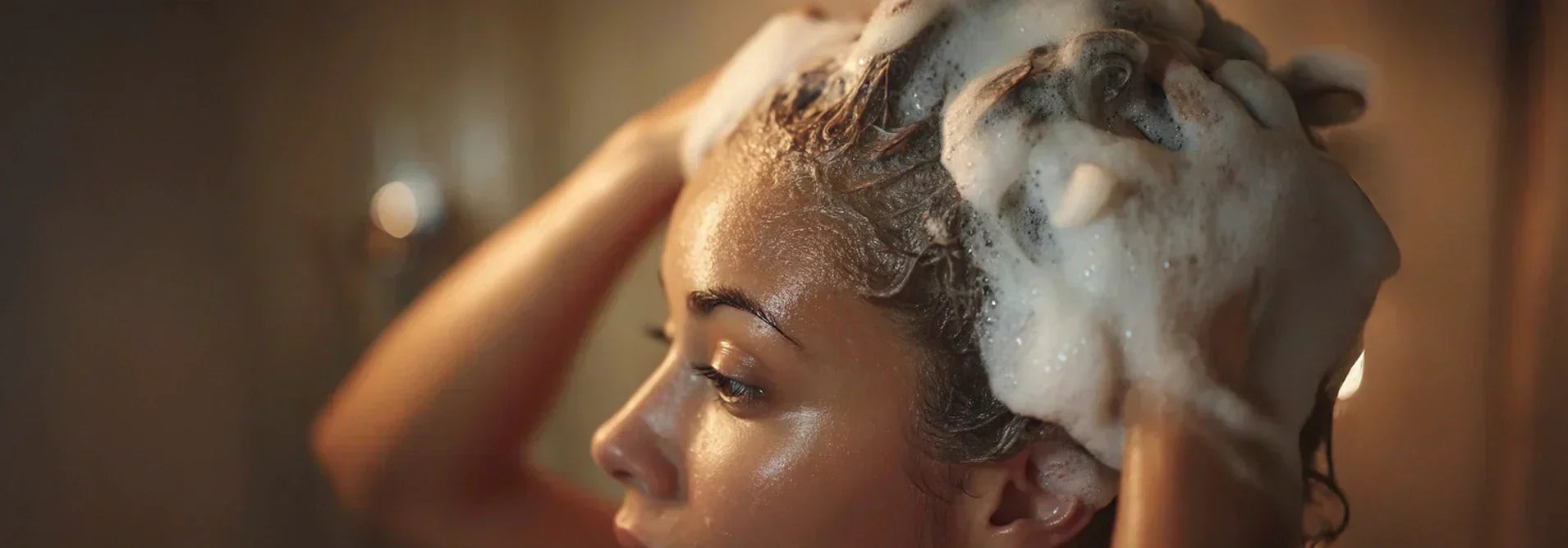







Spring brings a feeling of "reset" that is noticeable everywhere, including in our hair. We spend more hours outside, walk more, the sun hits our scalp without us thinking about it, and the wind becomes a constant companion in our routine. From there, many people with curls repeat the same diagnosis in front of the mirror: their hair is rougher, frizzes easily, loses shine, and definition lasts less.
It's usually not a technical fault or a problem of "not knowing how to style it." Often, it's a matter of fiber wear and tear. Environmental exposure increases, and hair suffers, especially if it's naturally prone to dryness (as is the case with most curly hair).
What the sun does to hair (and why it's noticeable in curls)
Hair can also suffer from photodamage. UV radiation has been linked to changes in the cuticle and fiber components, leading to increased porosity, a drier feel, and greater fragility.
Additionally, UVB radiation has been described as particularly relevant in hair protein loss, while UVA is more associated with color changes.
In the context of curly hair in spring, this is noticed sooner for a simple reason: the shape of the curl makes it difficult for natural oils to distribute to the ends. If the cuticle is altered by sun, wind, or friction, the curl loses its "basic softness" and frizz appears even if your routine is the same.
Why a curly hair mask is no longer an extra
When the wear is in the fiber, styling only masks the problem. The curly hair mask is the tool that truly corrects the problem at the root: it improves the feeling of softness, reduces friction when detangling, and helps the curl regain elasticity.
In spring, the classic question is: "Do I need a protein mask or just hydration?" The most useful answer is not a "yes or no," but understanding the balance.
Protein for curly hair: when it helps and when it's too much
Protein can be an ally when hair is weakened: falling curls, easily broken fibers, high porosity, coloring/bleaching, or a feeling of "soft but fragile hair." Cosmetic studies describe the use of hydrolyzed proteins (such as hydrolyzed keratin) to improve hair properties, and in some cases, their protective role against aggressions is even being investigated.
However, an excess of highly protein-rich products without compensating with conditioning can leave hair stiff or rough. Therefore, the keyword here is protein-hydration balance: strength without losing flexibility.
Three masks that fit in spring (depending on your hair)
This is where it's important to choose with intention, because not all masks work the same way.
If your curly hair tends to have high porosity, looks dull, and you feel it needs a boost of resistance, the Gyada Strengthening Hair Mask with Spirulina fits as a strengthening treatment. On your product page, it's presented as ideal for curly hair with high porosity, focusing on improving elasticity and leaving curls stronger and healthier.
If your situation is a clearer case of sun-damaged hair (or from heat, dyes, tools), with breakage, split ends, and persistent frizz, the Extreme Repair Mask by Alma Secret is designed as a deep repair mask for damaged, brittle hair or hair with high to medium porosity, helping to nourish, strengthen the fiber, and control frizz.
And if your problem is the opposite: curly hair that gets easily saturated, a tendency towards low porosity, but you want repair, definition, and extra "body" without adding weight, the Curly Superglow Mask with proteins by Alma Secret is described as an ideal treatment for curly hair with low porosity seeking hydration, definition, and repair, with protein input to strengthen the fiber.
The practical key for spring
During this season, the goal is not "to use more products," but to use treatments better. If your hair is more exposed, prioritizing a mask usually makes a difference before changing your gel.
Think of your routine as a balance: if you notice dryness and frizz, prioritize hydration and nourishment; if there's also weakness and your curl falls or breaks, smartly introduce protein. That fine-tuning is usually what makes hair go from "I can manage it" to "I like how it looks today."
If you'd like, I can prepare an even more "blog/quick" version (even shorter) with a final tip and a mini-block on "how to tell if you need protein or hydration" without a long list.