





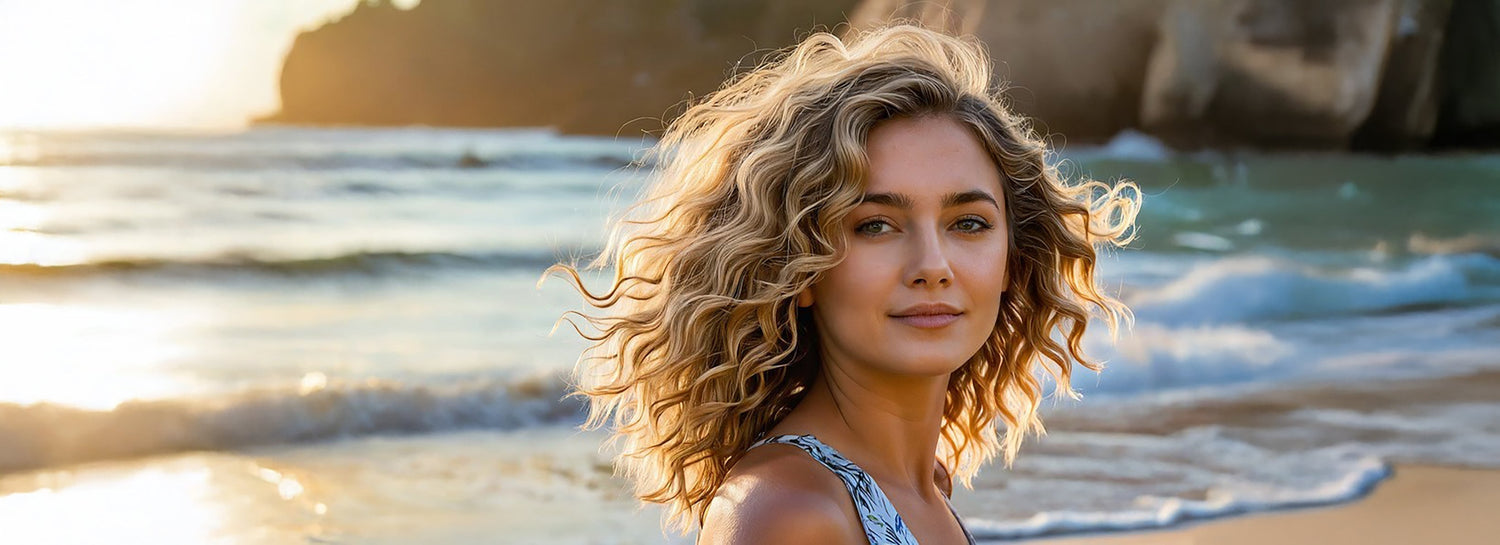
Highlights have something that wins us over every summer: they add light, movement, and that beautiful mane effect that screams for sun and vacation. The problem is that they also make hair more sensitive. And when that lightened fiber faces the sun, chlorine, and salt, it's normal for the hair to show it sooner and more intensely.
Therefore, if you see your highlights looking drier, duller, or frizzier this season, it's no coincidence. Summer can be one of the most demanding times for colored hair.
Why highlights suffer more in summer
To achieve luminous highlights, hair goes through a lightening process that alters its structure. This makes the fiber more porous and causes it to lose moisture more easily.
When you add hours of sun, swimming in the pool, salt, and more frequent washing to this sensitized base, the result is usually quite recognizable: rougher highlights, more fragile ends, less shine, and a tone that sometimes starts to look duller or more yellowish.
In other words: summer doesn't damage virgin hair the same way it damages highlighted hair. And that's why it also needs a different strategy.
The first step: protect before exposure
If you want to keep your highlights beautiful, the most important part of the routine starts before the beach or pool, not after.
Here, it makes a lot of sense to use a hair protector that helps create a barrier against the sun, chlorine, and salt. At this point, Gyada's heat protectant is a very good option when you're looking for light protection that cares for the fiber without weighing down the hair or making it feel heavy. It works especially well for hair that wants to remain loose and bouncy.
If your hair is drier, more sensitized, or tends to frizz a lot in summer, the Repair Mask Luc Color might be an even better fit. In addition to hydrating, it makes hair more flexible, easier to detangle, and better prepared to withstand outdoor exposure.
Recovering hair from within
Even if we protect our hair, summer still takes its toll. And with highlights, this is quickly noticeable if we don't incorporate some repair.
Here, My Best Option fits very well because it provides amino acids, helps keep the fiber stronger, and acts as that daily support that highlighted hair greatly appreciates when it starts to lose elasticity or feel more brittle.
It's one of those products that you don't always notice for "immediate miracle," but rather for how hair changes with consistent use: more flexible, more manageable, and less damaged.
When hair already feels dry and dull
There are times in summer when highlights are not only more sensitive, but clearly dry. The feel changes, the ends feel worse, and the hair loses softness and movement.
Here, it's advisable to take another step and go into deep repair. The Kerantea Peter Slim Total Protein treatment can be a good support when hair already shows more visible signs of wear and tear, and you need to strengthen the fiber to help it regain its best appearance and resistance.
The key here is not to wait for the damage to be evident, but to start repairing as soon as you notice that your hair changes in feel and response.
The gesture that makes a difference in mid-lengths and ends
If there's one part of the hair that especially suffers in summer, it's the ends. In highlighted hair, this area dries out faster, splits more easily, and loses density much more quickly.
Therefore, after hydrating and repairing, it makes sense to seal that nutrition with a finishing product. The Nourish hair oil can help a lot at this point because it softens, adds shine, and leaves a light film that helps control frizz and better protect the ends from daily wear and tear.
There's no need to overdo it. A few drops well-worked into the mid-lengths and ends are usually more than enough.
A simple routine to keep your highlights beautiful
If you want your highlights to look better at the end of summer, the logic of the routine would be quite simple: protect before exposure, repair afterward, and don't forget to seal mid-lengths and ends.
Before the beach or pool, use a heat protectant like Gyada or the Repair Mask Luc Color depending on what your hair needs. Afterwards, rely on My Best Option to keep the fiber stronger and hair better hydrated. When you notice more damage, incorporate Peter Slim as an intensive treatment. And finish with a few drops of Nourish oil to control frizz and keep the ends looking beautiful.
The important idea
Highlights don't have to become dry, dull, or damaged hair every summer. But they do need a more conscious routine.
Because keeping highlights beautiful doesn't just depend on the salon. It also depends on what you do afterward: how you protect your hair, how you repair it, and how you support a fiber that, at this time of year, becomes much more vulnerable.
And that's the difference between arriving in September with damaged hair... or with highlights that still have light, shine, and a good look.